
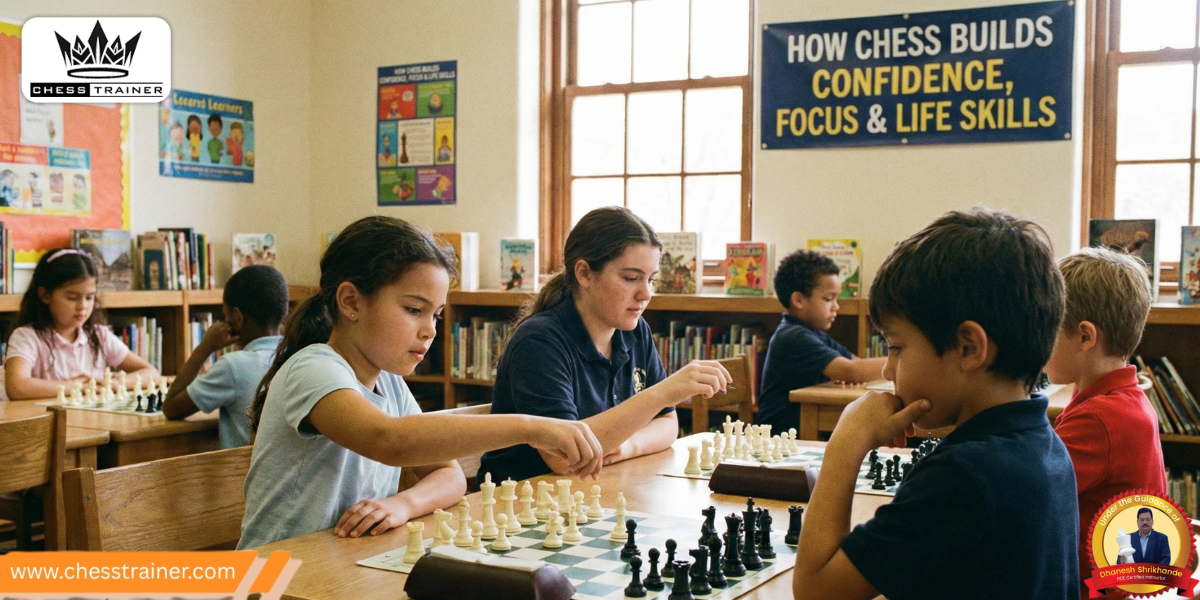
How Chess Builds Confidence, Focus & Life Skills in Children

In a world filled with fast-paced distractions, parents are constantly searching for meaningful activities that nurture their child’s mind and personality. Chess has emerged as one of the most powerful developmental tools for young learners. More than just a strategic board game, chess is a life-shaping discipline that helps children grow mentally, emotionally, and academically. It is no surprise that Chess builds confidence in children, enhances their ability to focus, and instills skills that benefit them throughout life.
Whether a child is a beginner or already fascinated by the game, structured guidance from an online chess trainer can accelerate their progress and build habits that shape their future. Let’s explore how chess transforms children into confident, focused, and resilient individuals — one move at a time.
1. Chess Builds Confidence by Encouraging Smart Decision-Making
One of the biggest reasons parents choose chess for their kids is because Chess builds confidence in children by teaching them to make independent, thoughtful decisions. Each move on the board requires analysis, planning, and courage to execute. Over time, children begin to trust their judgment, celebrate their wins, and learn from their losses.
This process naturally supports the benefits of chess for kids, helping them grow more self-assured in academics, social situations, and daily life. As they practice more through chess training for kids, their confidence increases, and they start believing in their ability to solve problems on their own.
2. Chess Sharpens Focus and Concentration
Modern distractions like screens and fast entertainment have made it difficult for children to stay focused. Chess reverses this trend. The game demands attention, patience, and the ability to stay mentally present.
This is why parents often notice that chess for concentration in children is incredibly effective. Kids who regularly practice chess show better performance in school, improved memory, and stronger listening skills. These are important cognitive benefits of chess that continue to support their academic growth.
A trained coach or online chess trainer helps children build these habits systematically, making focus feel natural and enjoyable.
3. A Powerful Tool for Child Development and Mental Growth
Chess is often described as “exercise for the brain” — and for good reason. It stimulates both sides of the brain, boosting creativity and logical reasoning simultaneously. This makes chess for child development one of the most holistic activities parents can offer.
One of the biggest advantages is the direct impact of chess for mental growth. Regular exposure to complex situations on the board strengthens neural pathways responsible for reasoning, analysis, and intuition. These skills are beneficial not just in chess, but in math, science, problem-solving, and even emotional intelligence.
Parents looking for meaningful, structured growth for their kids often choose chess because it aligns with how young minds naturally develop.
4. Chess Improves Focus Through Strategic Thinking

Another important benefit is how chess improves focus. Learning how chess improves focus is critical for young minds, especially in a world overloaded with rapid stimulation. Chess forces children to pause, think deeply, and predict outcomes before acting.
These habits translate into academic success, making chess for student success a growing trend in schools worldwide. When a child understands consequences through chess, they apply the same thinking to their studies, homework, and examinations.
5. Life Skills Learned Through Chess Go Beyond the Chessboard
Parents often ask what real-life skills children learn from the game. The answer is simple: countless.
The life skills learned through chess include:
- Patience during challenges
- Discipline in practice
- Emotional control when facing pressure
- Strategic thinking
- Time management
- Responsibility for one’s decisions
These life skills are essential for young learners navigating school, friendships, and growing responsibilities. No wonder experts label chess as a life skill for children, because it helps them build a strong foundation for the future.
6. Chess Teaches Problem-Solving and Logical Thinking
Every chess position is a puzzle waiting to be solved. Children learn to evaluate situations, consider different possibilities, and choose the best course of action. This is where chess improves problem-solving skills naturally and effectively.
Kids who learn chess tend to become better decision-makers because they are trained to think before acting. This habit improves their academic performance, particularly in subjects like mathematics and science.
Through the cognitive benefits of chess, children gain the ability to interpret patterns, anticipate outcomes, and stay several steps ahead — a trait admired in successful adults.
7. Emotional Development Through Chess
Chess is not only mentally stimulating but also emotionally enriching. As children play more, they experience winning, losing, pressure, and the need for resilience.
This supports chess and emotional development, helping them:
- Manage frustration
- Build patience
- Handle success humbly
- Accept setbacks with grace
- Bounce back after losing a game
Such emotional growth is rare to find in other indoor activities. It is one of the most meaningful benefits of chess for kids, shaping them into emotionally strong and balanced individuals.
8. Why Children Should Learn Chess Early
The early years of childhood are crucial for brain development. That’s why experts strongly advocate why children should learn chess from a young age.
Here’s why learning early matters:
- Young minds absorb patterns faster
- Kids develop stronger focus habits
- Logical thinking becomes a natural skill
- Confidence grows steadily through small improvements
And with access to an online chess trainer, it’s easier than ever for young learners to begin their journey from home with structured coaching.
9. Chess Supports Academic Success and Lifelong Learning
With growing pressure on children to excel in school, chess acts as a secret academic booster. Parents often observe that chess for student success is not just a claim — it’s reality.
Children who play chess regularly show improvements in:
- Problem-solving
- Memory retention
- Reading comprehension
- Logical reasoning
- Classroom participation
This supports the concept of chess for young learners as a powerful educational tool beyond textbooks and classrooms.
10. The Role of Online Chess Training in Skill Development
Today, many parents prefer online learning because it provides flexibility and expert guidance without location barriers. An online chess trainer offers personalized training, structured lessons, progress monitoring, and engaging practice sessions.
This makes chess training for kids much more effective, as the trainer can customize learning based on the child’s pace and strengths.
With online guidance, children get the right balance of discipline, personalized coaching, and confidence-building strategies — reinforcing how Chess builds confidence in children with every lesson.
Final Thoughts
Chess is not just a game — it is a lifelong learning tool that shapes young minds with discipline, creativity, confidence, and emotional intelligence. From improving focus to strengthening academic performance, the benefits of chess for kids are limitless.
With expert guidance from an online chess trainer, children develop strong foundations for success in school and life. And most importantly, Chess builds confidence in children, empowering them to think, grow, and succeed one thoughtful move at a time.
Also Read: Chess for Kids: Fun Ways to Learn and Build Confidence
👉 Follow Us on Social Media! Stay Connected & Stay Ahead! 👇
📘 Facebook || 📸 Instagram || 💼 LinkedIn || 🎯 Twitter || 📌 Pinterest