
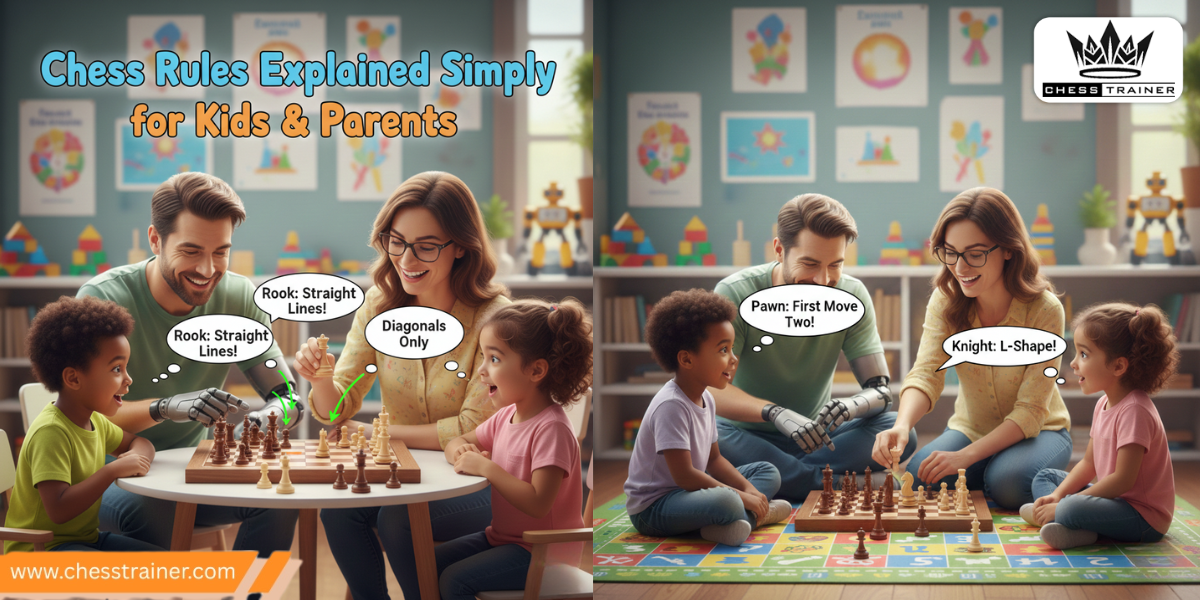
Chess Rules Explained Simply for Kids & Parents

Learning chess can be an exciting journey for both children and parents. However, many families feel overwhelmed by complex explanations and unfamiliar terminology. That’s why this guide focuses on Chess rules explained for kids and parents in a clear, friendly, and step-by-step way.
Whether your child is just starting out or you’re a parent looking to support their learning, understanding Chess rules for kids and Chess rules for beginners can make the experience enjoyable and stress-free. With guidance from an experienced online chess trainer, chess becomes less intimidating and more engaging.
Why Chess Is Great for Kids and Parents
Chess is more than a board game. It improves concentration, memory, problem-solving skills, and patience. When parents learn alongside their children, it becomes a bonding activity that encourages logical thinking and healthy competition.
By focusing on Simple chess rules and explaining concepts in an age-appropriate way, families can enjoy learning together. This approach supports Chess learning for kids while also helping parents understand the basics without confusion.
Chess Board Setup for Kids
Before learning moves, it’s important to understand the board.
The Chess board setup for kids is simple:
- The board has 64 squares (8 rows × 8 columns)
- Always place the board so that a white square is on the right side
- Each player starts with 16 pieces
Understanding the Chess board setup for kids helps children visualize the game and prepares them for learning moves. This step is a key part of Chess basics for beginners and an essential foundation for any kids chess guide.
Chess Pieces and Their Moves
One of the most important parts of Chess rules explained for kids and parents is knowing how each piece moves. Learning Chess pieces and their moves step by step helps children feel confident.
The Pieces:
- Pawn – Moves forward one square
- Rook – Moves straight
- Knight – Moves in an L shape
- Bishop – Moves diagonally
- Queen – Moves in any direction
- King – Moves one square at a time
Understanding Chess pieces and their moves is central to Chess rules and moves and makes it easier to play real games without frustration.
Simple Chess Rules Every Beginner Should Know
For beginners, focusing on Easy chess rules for children makes learning enjoyable. These Simple chess rules ensure kids don’t feel overwhelmed.
Key rules include:
- One move at a time
- Capture by landing on an opponent’s piece
- Protect your king at all times
By following Chess rules explained simply, kids gradually build confidence. This method works well for Chess rules for beginners and supports effective Chess training for beginners.
How to Play Chess for Kids – Step by Step
Parents often ask, How do I explain chess to my child? The answer is simple—break it down.
How to play chess for kids involves:
- Setting up the board correctly
- Learning piece movement
- Understanding check and checkmate
- Playing short practice games
This Learn chess step by step approach is ideal for beginners and aligns perfectly with Chess rules explained for beginners. Many parents find that enrolling with an online chess trainer speeds up this learning process.
Chess Rules for Parents: How to Support Your Child
Understanding Chess rules for parents helps adults guide their children without pressure. You don’t need to be an expert-just knowing the basics is enough.
Helpful Chess tips for parents:
- Encourage practice, not perfection
- Praise effort, not just winning
- Learn together using a kids chess guide
Parents who understand Chess rules for kids can create a positive learning environment and support consistent progress.
Beginner Chess Guide for Families
A structured Beginner chess guide makes learning smoother. This guide focuses on repetition, practice, and fun—key elements for Chess learning for kids.
A good Beginner chess guide includes:
- Visual explanations
- Practice games
- Simple challenges
Many families choose an online chess trainer to follow a guided curriculum designed specifically for beginners.
Chess Game Rules for Kids Explained Clearly
Children should understand the goal of the game early on. The main objective is to checkmate the opponent’s king.
Chess game rules for kids include:
- What check means
- How checkmate ends the game
- Why protecting the king matters
By explaining Chess rules explained simply, kids quickly grasp these ideas without confusion.
Introduction to Chess for Children
A friendly Introduction to chess for children should focus on curiosity and enjoyment. Avoid long explanations at the beginning.
This approach helps reinforce:
- Chess basics for beginners
- Chess rules for beginners
- Chess learning for kids
With regular practice and guidance from an online chess trainer, children develop confidence naturally.
Why Online Chess Training Helps Beginners
Learning with an online chess trainer provides structured lessons, interactive tools, and age-appropriate teaching. This is especially useful for Chess training for beginners.
Benefits include:
- Personalized learning pace
- Clear explanation of Chess rules explained for kids and parents
- Fun practice games
Online coaching complements home learning and supports long-term skill development.
Kids Chess Guide: Making Learning Fun
A well-designed Kids chess guide keeps children motivated. Games, puzzles, and challenges help reinforce Chess rules and moves while keeping learning fun.
When kids enjoy the process, Chess learning for kids becomes consistent and rewarding.
Final Thoughts
Chess doesn’t have to be complicated. With Chess rules explained for kids and parents, families can enjoy learning together without stress. By focusing on Simple chess rules, step-by-step learning, and consistent practice, children build confidence and skills that last a lifetime.
Whether you’re using a book, practicing at home, or working with an online chess trainer, the key is patience and encouragement. Chess is a journey—and every move is a learning opportunity.
Also Read: How Chess Builds Confidence, Focus & Life Skills in Children
👉 Follow Us on Social Media! Stay Connected & Stay Ahead! 👇
📘 Facebook || 📸 Instagram || 💼 LinkedIn || 🎯 Twitter || 📌 Pinterest